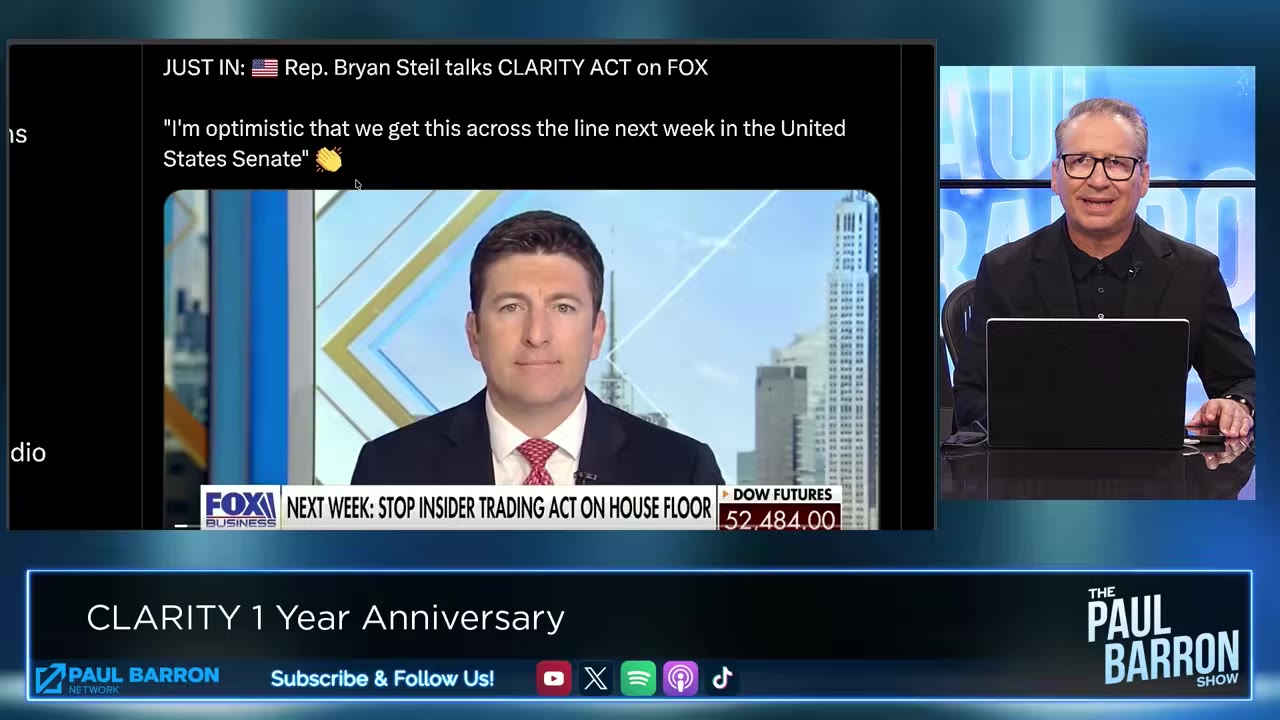
The Clarity Bill is now at a crucial point, having been passed in the House a year ago, but this has not made lawmakers more willing to help move the bill forward. In this article, Paul Barron gives an overview of why the momentum toward passing it is declining and what implications this has for US crypto regulation.
Political Posturing Stalls the Clarity Bill
When asked for his opinion regarding the Clarity Bill, Paul Barron indicated that the legislation would provide regulatory certainty to the United States cryptocurrency industry. It has been a little over a year since the House passed this piece of legislation, but there have been no major scandals involving morals or stablecoins related to this bill to date. Paul Barron, however, indicates that political gamesmanship has now become the main reason for delaying action on this legislation any further. Members of Congress are busy with other matters, and the momentum that existed last year is gone, leaving the future of the Clarity Bill in limbo.
As can be seen from this situation, there is no sense of urgency in Congress on this matter. Even though there are numerous discussions taking place regarding the need for regulations on digital assets, legislators show no desire to address the issue quickly.
Congress Shifts Attention to New, Minimalist Legislation
As the lengthy Clarity Bill collects dust, Congress has unveiled its two latest legislative offerings: H. Res. 111 (supporting blockchain technology and digital assets) and the American Reserve Modernization Act—neither of which is longer than four pages. According to Paul Barron, this minimalist style reflects a change in legislative strategy but raises concerns about Congress’s real interest in regulating digital assets.
Such short bills might be an attempt to appear proactive regarding the cryptocurrency realm without having to engage in tougher discussions about the broader regulatory framework.
Lack of Lawmaker Engagement and Mounting Criticism
There was very low engagement from lawmakers in the Clarity Bill hearing, with only a few attending. Barron notes that this indicates very little real interest in dealing with the complexities involved in overall cryptocurrency policy. A lack of debate and transparency around the bill shows that it isn’t even a priority for most members of Congress.
To make matters worse, there is now opposition from Senator Elizabeth Warren, who believes the bill could lead to conflicts of interest and be misused by political actors such as those in the Trump Administration. There will likely be new amendments added to the bill this week as it moves to the Senate floor. As Barron explains, it is difficult to tell what the timeline for resolution will be at this stage.
Industry Response: Innovators Push Forward
The uncertainty of the regulatory environment does not stop innovative companies like Robinhood from rolling out new products. According to Paul Barron, this resilience indicates that the crypto market can adapt even when there is a lack of regulatory clarity. However, he mentions that the recent activities of such companies highlight the urgent need for clear and comprehensive regulations that can provide a stable foundation for growth.
The delays and political impasse surrounding the Clarity Bill show that, although the industry can innovate without clear rules, long-term sustainability may ultimately require firm decisions by lawmakers.
Source — Paul Barron Network: https://www.youtube.com/watch?v=QmKQRz85cA0