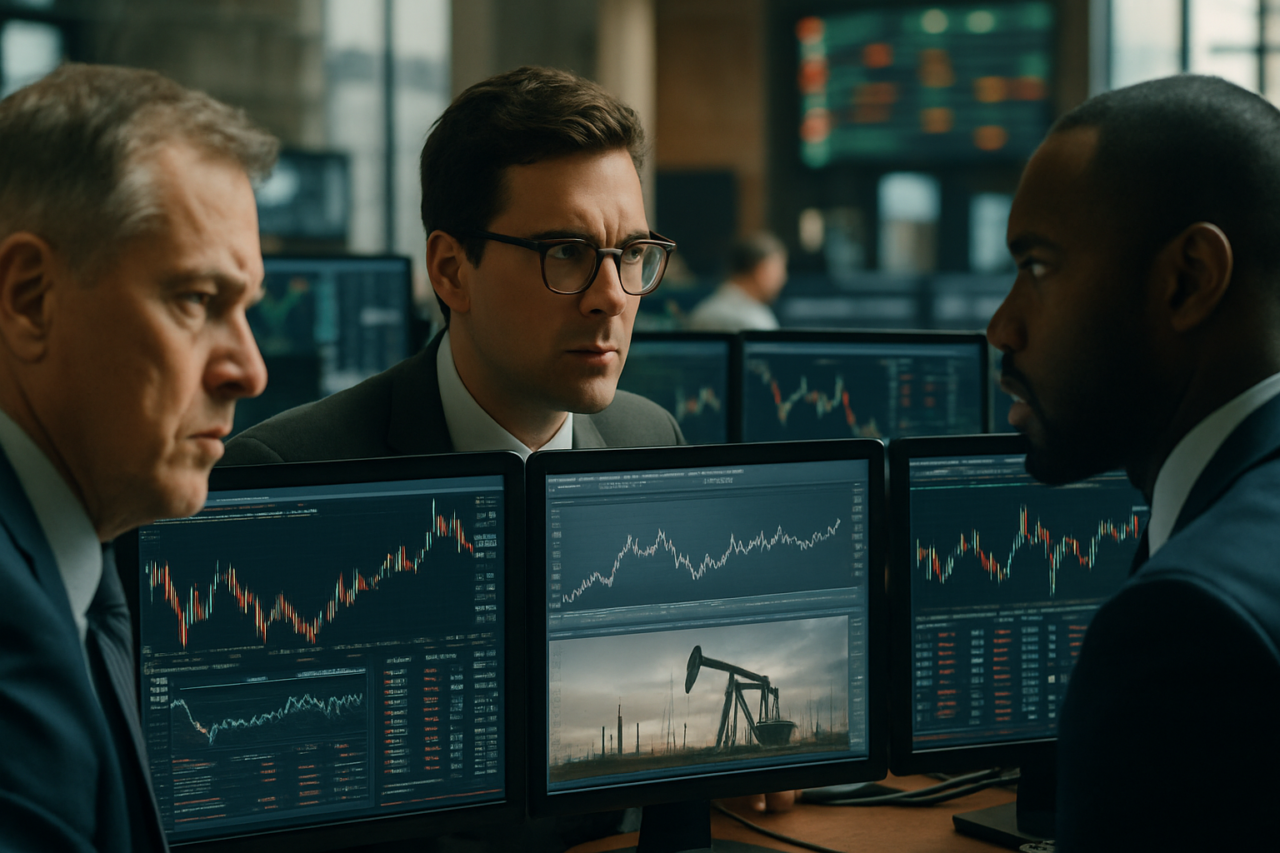
What was once the domain of the crypto world is making its way into more conventional arenas. Perpetual futures are now being seen in oil and equities, a development that has not only put them on the radar of institutions but also strained relations with the old guard of exchanges.
What Are Perpetual Futures and Why Do They Matter?
In a nutshell, a perpetual future is a derivative with no set end date. There is no need to roll over or close out a position, which gives the trader a good deal of flexibility. The product made its name in the cryptocurrency space, where it was a favorite for those looking to bet on the price of something like Bitcoin without the hassle of actually owning it. They are in vogue because of the liquidity, straightforward leverage, and the fact that they settle on an ongoing basis.
Now that we are seeing them in oil and stocks, there is an opportunity for a different kind of trading. For the institutional side, it opens up fresh avenues and strategies. In time, this could well alter the mechanics of the traditional market, with things like round-the-clock trading and novel approaches to risk coming into play.
Institutional Players Take Notice
Institutional players are taking note of the entry of perpetual futures into oil and equities, as reported by CoinDesk. For them, it is a way to access more active trading and hedging possibilities. There is an appeal in the kind of flexibility and liquidity available here, in contrast to the rigid hours and fixed maturities of a standard futures contract.
All this points to a future where perpetuals are no longer viewed as a crypto oddity but as a fixture in the broader market. If that happens, it will likely inject new life into the way we handle and trade conventional assets.
Growing Tensions with Traditional Exchanges
With perpetual futures making inroads beyond the crypto space, a head-to-head rivalry with the old guard of traditional exchanges is taking shape. According to CoinDesk, it has become a point of contention; the established players are being put on the spot to keep up with new ways of doing business.
There is no doubt that these instruments upend the way things have been done, and they can be a more open and affordable option for some. But they also highlight issues of oversight and whether the conventional system is built to support them without unsettling market stability.
Source — CoinDesk: https://www.youtube.com/watch?v=Pxy9Aoy2XI4
Explore how perpetual futures impact oil and equities markets by practicing trading risk-free on our simulator. practice trading risk-free.