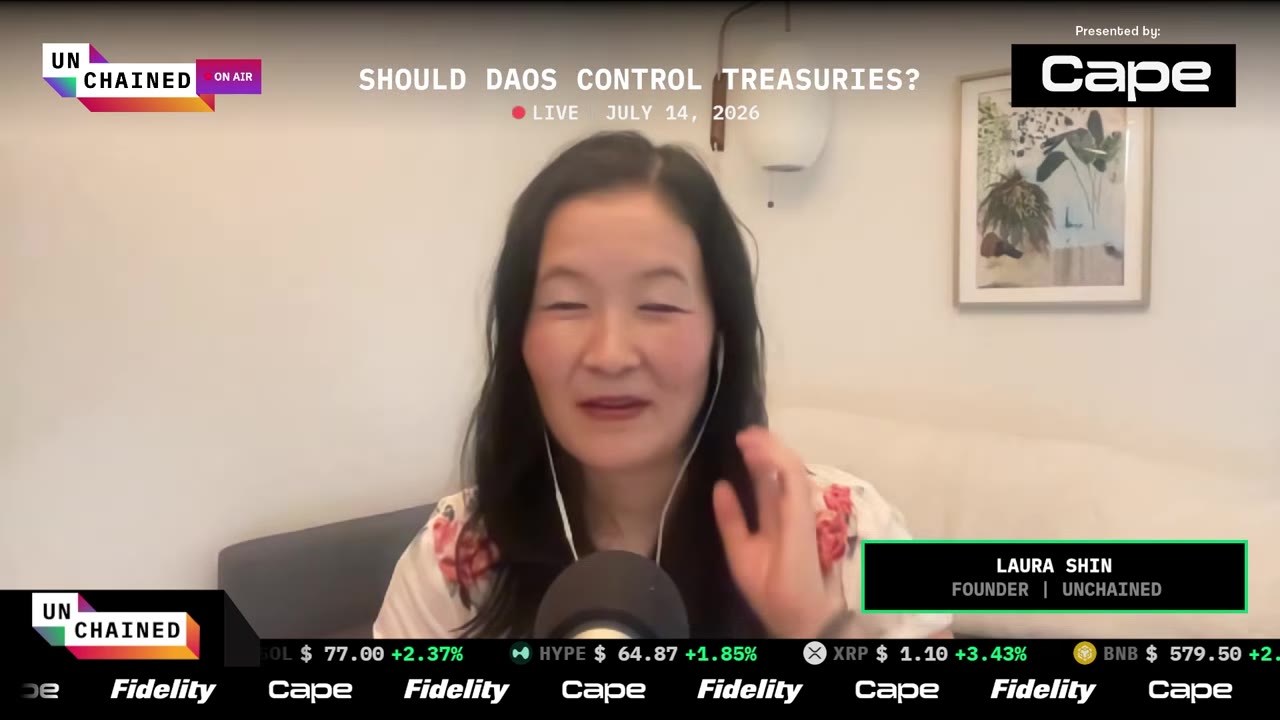
The ENS DAO controversy has highlighted governance issues in decentralized protocols. In response to ENS founder Nick Johnson using his tokens to block an important amendment to the security council, the crypto community has raised questions about decentralization.
What Triggered the ENS DAO Controversy?
There are no easy answers for the Ethereum Name Service (ENS) DAO lately. As a cornerstone of the crypto ecosystem, the project is contending with some weighty governance issues. The Unchained podcast reports that the trouble started when ENS founder Nick Johnson used his own tokens to block an amendment to the security council. It was a move that underscored the power disparity between a founder and the rest of the community, leaving one to question if decentralized protocols are truly insulated from the kind of centralization they are meant to avoid.
Power Dynamics and Community Frustration
There was considerable frustration among DAO members at the way Johnson was able to override the vote, a maneuver made possible by the lack of voters. It laid bare a vulnerability in the way the DAO is governed; without active participation from the community, those with the most tokens or the founders are free to call the shots. Unchained’s host also pointed out that ENS Labs has put more than $20 million into protocol development recently. That kind of expenditure has raised some hard questions as to whether the money is being used in ways that best serve the community.
Exploring Alternative Governance Solutions
The fallout from the ENS DAO affair has prompted protocol leaders and experts to propose new approaches for running decentralized organizations. One can see this in the work of MetadAO, which is experimenting with decision markets as an alternative to conventional voting in order to make governance more efficient. JitoDAO has taken a different approach with its curated delegate selection model; by doing so it hopes to raise the standard of decisions and ensure that any voice heard comes from a well-informed representative.
In essence, these are attempts to address the deficiencies that were on display with ENS DAO, namely the opacity, the imbalance of power, and poor turnout. The Unchained podcast has noted how such efforts may well define what is to come in the world of decentralized governance.
Broader Implications for Token Governance
One does not have to look far for a parallel to the ENS DAO controversy; Venice is among the other projects that are grappling with matters of governance, particularly when it comes to their tokens. The VVV token has been the subject of some debate at Venice as to whether it ought to be viewed as an equity or a utility asset, a case in point for how the line between centralized control and the ideals of decentralization can become blurred.
Then there is MetadAO and its peers, which are putting in place transparent frameworks for governance with a view to making their tokens more attractive to investors and earning their trust. It is becoming ever more apparent that as DAOs are forced to deal with such questions, they will require community-led models of governance that are truly innovative.
Source — Unchained: https://www.youtube.com/watch?v=CxF2z4HS4qw