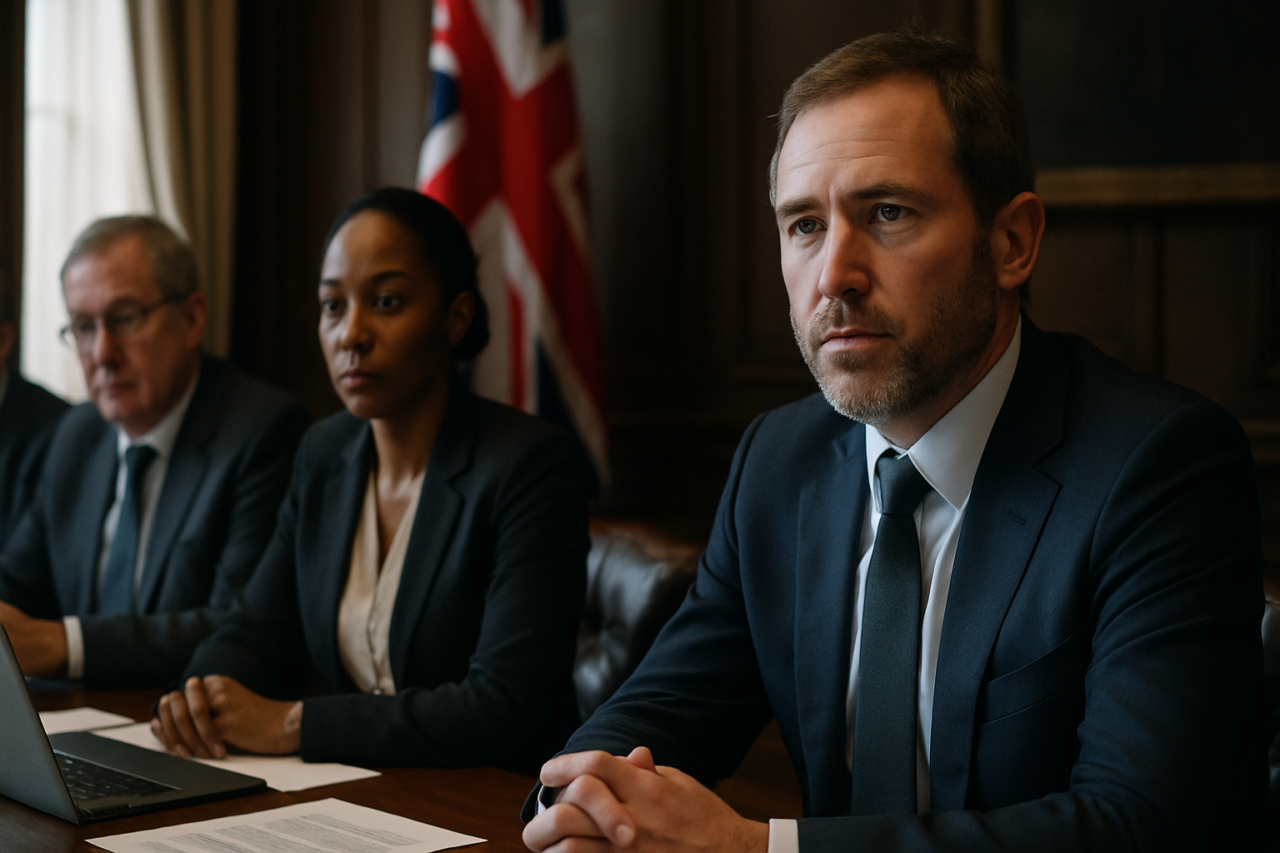
Participating in the Ripple tokenization task force is an important milestone for the company, which recently fought off charges from the SEC. Being part of the UK government-led initiative in partnership with the likes of BlackRock and Goldman Sachs paves the way for Ripple to be prominently seen in the adaptive move toward the utilization of institutional blockchain applications.
How Ripple Overcame SEC Challenges to Lead in Tokenization
In 2020, Ripple came under severe pressure from the Securities and Exchange Commission (SEC) as the company was on the verge of being shut down. However, Ripple overcame this challenge and emerged as one of the most important players in establishing a connection between TradFi and cryptocurrency through tokenization. The recent CryptoWendyO episode explains how Ripple’s history has shown resilience and strength against both regulatory and technological obstacles.
Inside the UK Government’s Tokenization Task Force
The Ripple tokenization task force is the result of the UK government’s broader efforts to unite a group of 54 different businesses, including well-known companies like BlackRock and Goldman Sachs. The companies involved in this effort will begin testing various aspects of blockchain technology within asset trading, with a focus on ensuring that costs for utilizing this technology are kept low.
A report from the UK’s Treasury recently focused on Ripple’s acquisition of Hidden Road for $1.25 billion, which it will now market as Ripple Prime Tokenization. This shows that traditional financial markets have started to adopt cryptocurrency and implement its use in practice.
Ripple’s Technology in Real-World Financial Applications
According to the report, Ripple technology is utilized by Santander for cross-border payments, as exemplified by Ripple’s advancement of real-world asset tokenization on the blockchain. This constitutes a significant development not only for the organization but also for the cryptocurrency industry overall, reflecting growing trust in blockchain technology’s capability to work with important financial infrastructure effectively.
Through the task force, there is a focus on the interoperability of networks, which will allow trading and settlement operations to be efficient in terms of both time and costs. The report by the UK Treasury is somewhat cautious about aspects related to permissionless networks like Bitcoin due to their level of decentralization; however, it notes some advantages offered by Ripple’s XRPL, including the ability to halt transactions when required, which is very important for traditional financial institutions that are likely to cooperate with Ripple under regulatory compliance conditions.
What Ripple’s Inclusion Means for the Future of Finance
Ripple’s participation in the tokenization working group together with some of the world’s largest banks emphasizes the increasing popularity of blockchain technology in finance. According to the analysis by CryptoWendyO, this is a clear indication that governments and major financial institutions see blockchain not only as an investment opportunity but as the foundation of future financial technologies.
Ripple’s participation in the ongoing work of the group will allow for testing the technology in practice and determining its influence on the operation of global financial markets in the near future.
Source — CryptoWendyO: https://www.youtube.com/watch?v=Iu1rW_GLpMA