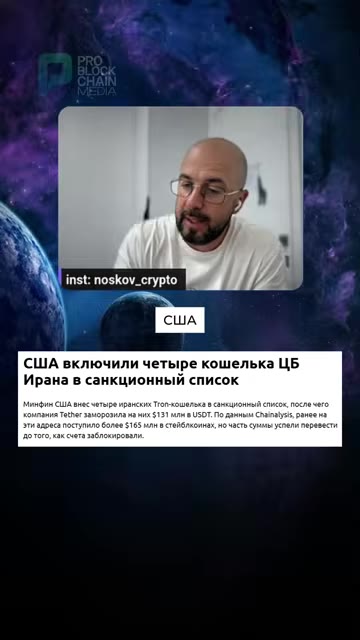
Tether freezes Iranian Central Bank wallets, locking $131 million USDT after US regulators sanctioned four addresses. This move escalates financial restrictions on Iran’s access to global crypto markets.
US Authorities Target Iranian Central Bank’s Crypto Assets
A significant step taken by US financial regulators was placing a total of four wallets belonging to the Central Bank of Iran (CBI) on a sanctions list, which had a direct impact on the crypto industry. According to recent reports from Pro Blockchain Media Live, Tether has frozen $131 million USDT connected to those wallets, which initially contained $165 million USDT before funds were transferred out prior to the freeze, illustrating the swift response by those subject to sanctions.
Impact on Iran’s Access to Global Finance
The US blocking access to USDT for the Iranian Central Bank is part of a broader US strategy to disconnect Iran from the international financial network. According to the Pro Blockchain Media broadcast, this is a further step in the US sanctions strategy. This indicates that US authorities are prepared to restrict any possible methods Iran might use to continue trading internationally using their stablecoin reserves.
Losing access to $131 million in stablecoins will complicate the Iranian Central Bank’s efforts to bypass restrictions imposed by banks. The Central Bank was using USDT for this purpose, but Tether has now frozen the Central Bank’s wallets as a measure against Iran.
Broader Consequences and Future Actions
The actions taken by Tether and US authorities may be just the beginning. According to information reported on Pro Blockchain Media Live, other Iranian-controlled wallets and financial institutions may soon face similar sanctions or have their wallets frozen. This suggests that there will be more actions aimed at compliance in the cryptocurrency industry and at preventing sanctioned countries from using cryptocurrency.
Observers are watching how cryptocurrency service providers respond to increased regulation. These developments may set a precedent for how stablecoin issuers interact with such countries and could change how global companies operate in high-risk areas.
Source — Pro Blockchain Media Live: https://www.youtube.com/watch?v=AlshkvkTK6I